A New Physics Platform
A NEW DEVICE.
A NEW INDUSTRY.
Once in a generation, physics produces a device that changes everything. The laser. The LED. The solar cell. Each emerged from the same underlying science: the precise control of light and matter. Maxwell Labs is building the next device in that lineage.
The Maxwell Labs Photonic Cold Plate uses anti-Stokes fluorescence to extract heat from solid materials at the quantum level — converting it directly into light. That light is captured and returned as usable energy. A solid-state, fluid-free system with zero moving parts.
The Mechanism
HOW LIGHT
REMOVES HEAT.
Anti-Stokes fluorescence: a quantum physics process that converts thermal energy directly into light — permanently removing heat from the material rather than relocating it.
Conventional cooling works by moving heat — absorbing it into a fluid and carrying it away. The heat still exists. It has simply been relocated. Maxwell Labs Photonic Cooling works differently. It removes heat by converting it into photons that physically exit the material.
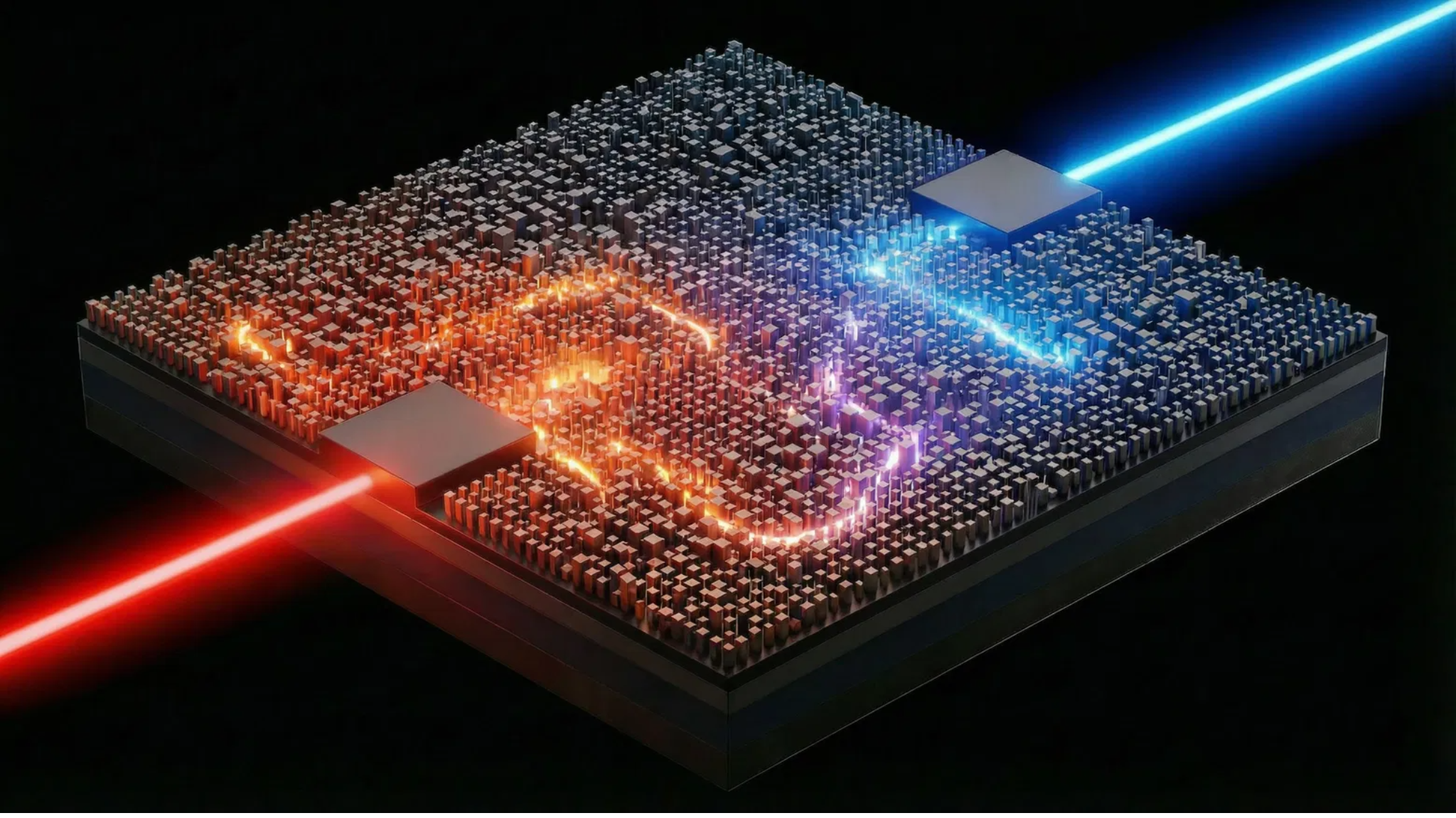
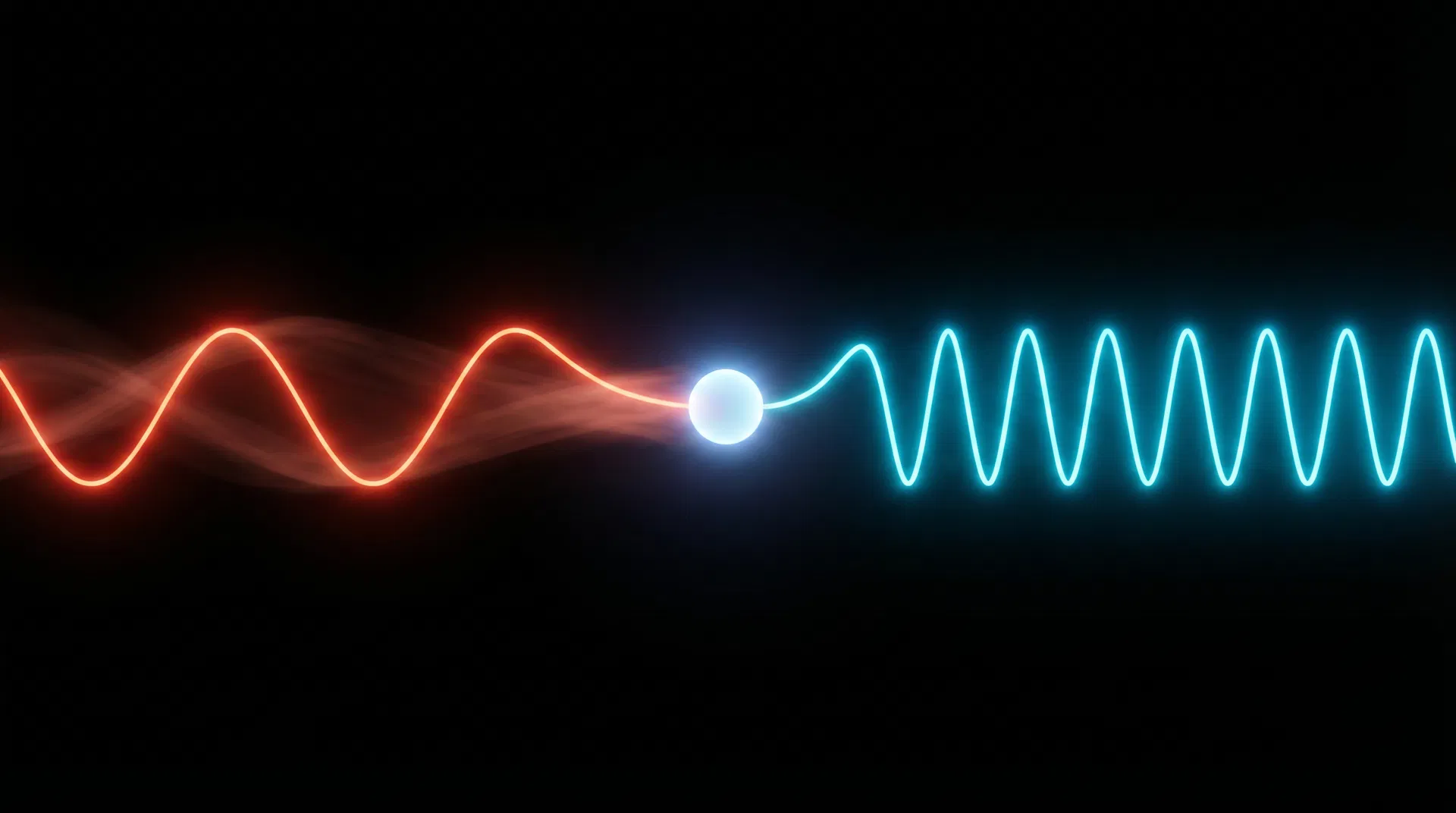
A pump laser delivers precisely tuned light into the cooling material. The light couples with phonons — the quantum carriers of heat — and excites them to a higher energy state. The material then emits photons at a higher frequency than the absorbed light. Each emitted photon carries more energy than the absorbed photon. The difference is thermal energy, extracted from the material and carried away as light.
The result: heat does not move through fluid. It leaves as radiation. That radiation is captured and converted back into electricity at approximately 85% efficiency — a cooling system that generates power.
GOVERNED BY LASER POWER
Cooling temperature is set by laser intensity, not fluid temperature — enabling conditions impossible for any fluid-based system.
MICROSECOND RESPONSE
Operates at the same timescales as chip switching — targeting hotspots dynamically as they form, not after the fact.
ZERO THERMAL RESISTANCE
Direct extraction at the hotspot location eliminates the conduction barrier that limits all surface-contact cooling methods.
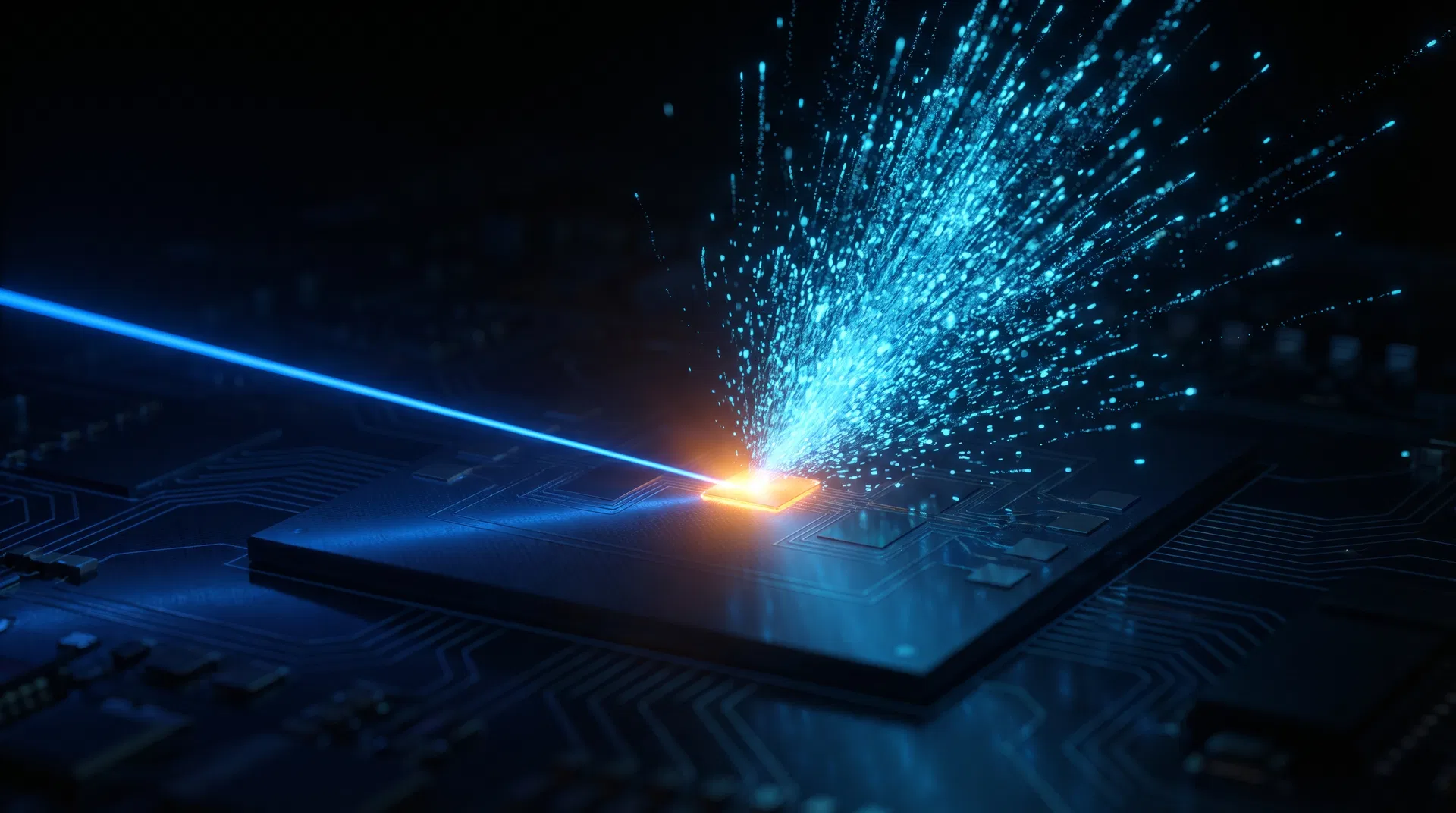
A pump laser targets a thermal hotspot on the chip surface. Emitted photons carry thermal energy out of the semiconductor lattice as light — captured and converted back to electricity.
Four Sequential Physics Events — From Laser Input to Electricity Output
01
LASER DELIVERY
A pump laser delivers photons at a wavelength matched to the cooling material's absorption band — guided directly to the hotspot.
02
PHONON COUPLING
Photons interact with phonons — the quantum carriers of thermal energy — exciting them to a higher energy state and picking up heat from the lattice.
03
ANTI-STOKES EMISSION
The material emits photons at a higher frequency than absorbed. The energy difference is thermal energy permanently extracted from the chip as light.
04
ENERGY RECOVERY
Emitted photons are directed to a photovoltaic back-reflector at ~85% efficiency — converting extracted heat back into usable electrical power.
Core Technology
THE PHOTONIC COLD PLATE.
MAXWELL LABS' HERO PRODUCT.
The Photonic Cold Plate is the core IP of Maxwell Labs — and the only component in the system that is not off-the-shelf. It sits directly on the chip, targets hotspots with laser precision, and converts thermal energy into usable electricity. Compatible with any chip architecture. Any form factor. Any thermal environment.
Real-World Progress
THE PROTOTYPE
IS REAL.
Maxwell Labs has built and is actively testing a working prototype of the Photonic Cold Plate at its facility in Little Canada, Minnesota. The lab is operational with optical rooms, precision lasers, and a clean room environment.
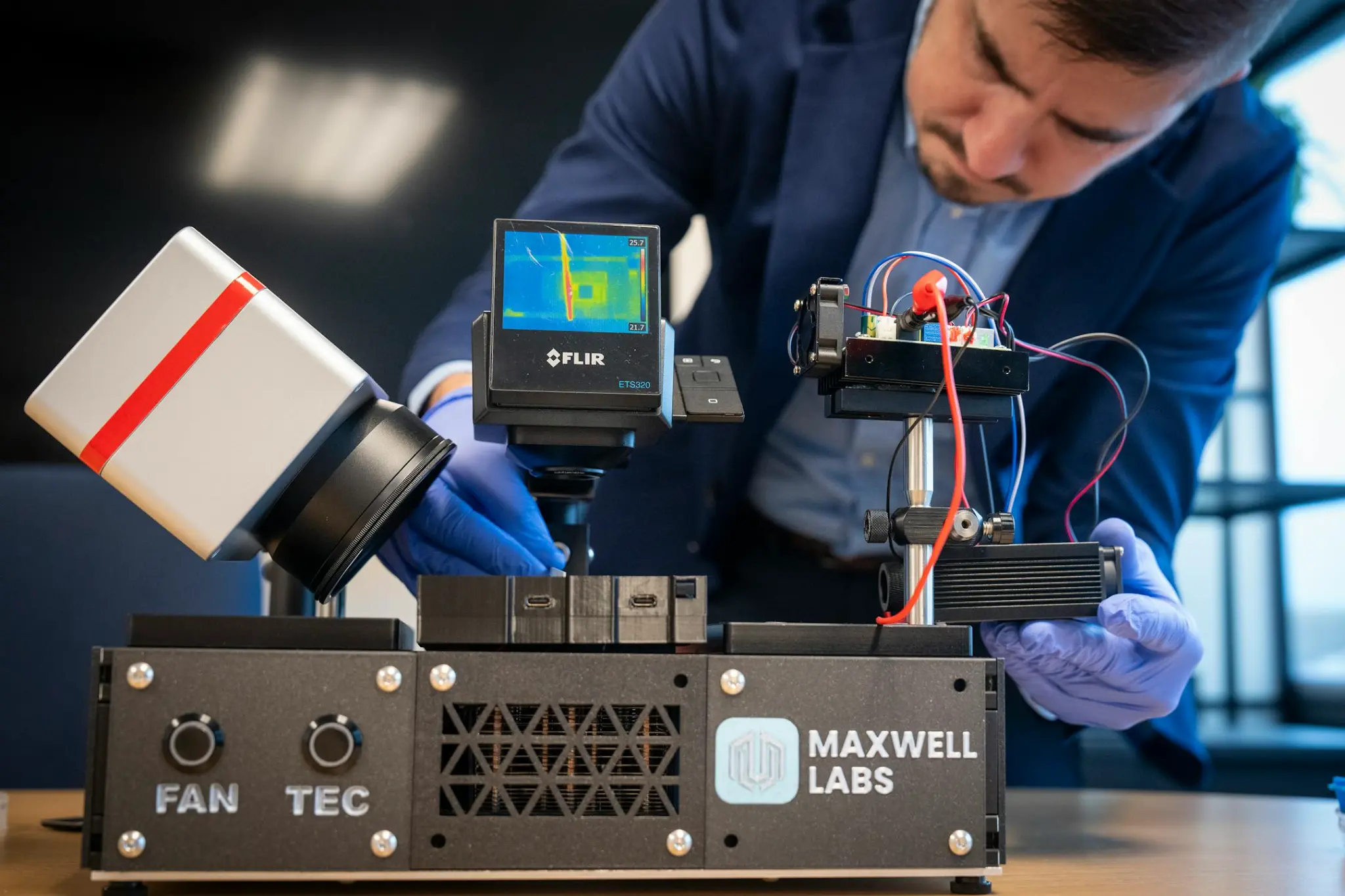
"Everything is off-the-shelf except the cold plate. That is where the breakthrough lives."
Maxwell Labs Founder & CEO Jacob Balma sets up a prototype demonstration system at the company's facility in Little Canada. (Leila Navidi / The Minnesota Star Tribune)
Seed + SBIR grants + early institutional backing. Lab fully operational.
Strategic angels, deep-tech funds, and defense-aligned investors backing the round.
Lab-scale prototype active. First demo imminent. R&D team expanding.
Development Progress
WHERE WE ARE
ON THE ROADMAP.
Technology Readiness Level (TRL) is the standard framework used by NASA, DoD, and the U.S. national labs to measure the maturity of a technology from concept to deployment.
Validation Partners
PROVEN AT THE HIGHEST LEVEL.
The core building blocks of the Maxwell Labs platform have been validated at world-class national laboratories and research institutions.